In the Canopy Green Again, Still Weakened Below: Why Your Trees Need Professional Inspection Now

Von
A week of extreme temperatures is behind us. Never before has it been this hot in June. Unlike in the past, weather events like heavy rain and extreme heat no longer just pass by. Instead, the weather system lingers over one place for an extended period, and we feel trapped beneath it like under a dome.
We need to actively support people, animals, and our trees so they can withstand these conditions.
The current heatwave shows how taxing extreme weather can be. Even when tree crowns temporarily recover, damage to roots and vascular tissue often remains for much longer. The latest forest condition report, published by the Federal Ministry of Agriculture on May 19, 2026, sends a clear message: Germany’s forests remain under significant pressure. Only one in five trees is still considered healthy. Despite rainfall in recent years, many stands continue to suffer from the effects of years of drought and extreme heat.
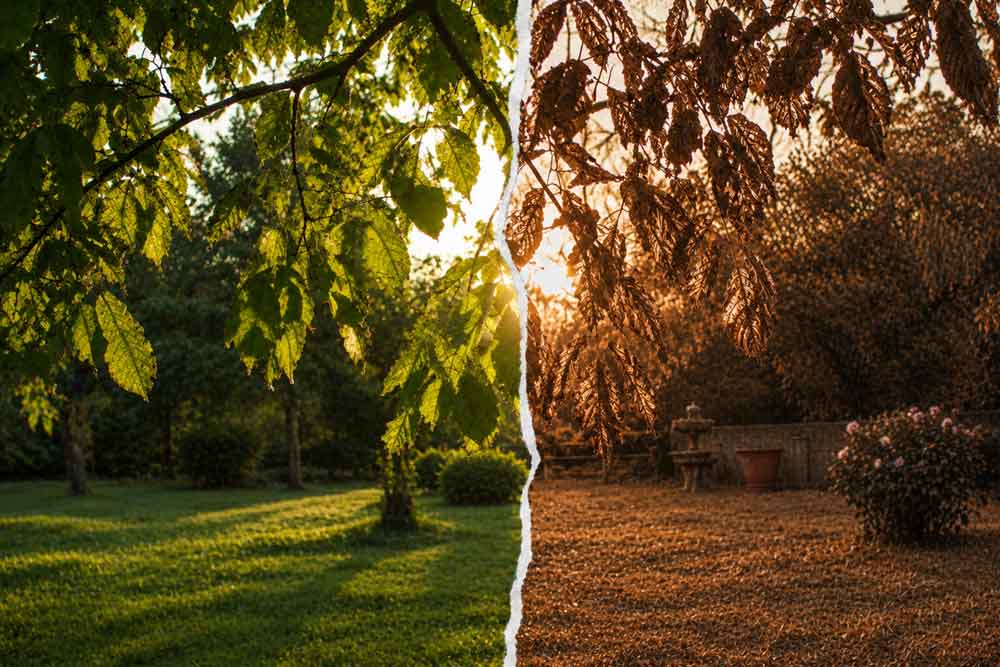
For us as tree experts, the lesson is always the same: a tree that turns green again in the canopy is not automatically a healthy tree.
What the reports show for our region
Closer to home, the latest forest condition report for North Rhine-Westphalia, presented on November 20, 2025, shows a similar picture: slight recovery, but no real turning point. Only 29 percent of trees in NRW have a healthy, dense crown. Another 34 percent are still classified as severely damaged. Over the long term, the share of healthy trees in NRW has roughly been cut in half since monitoring began in 1984.
The same picture applies to the Siebengebirge and the neighboring Westerwald across the state border. Fabian Ehmann, the forest policy spokesperson for the Green parliamentary group in Rhineland-Palatinate, put it this way in the parliamentary debate on January 29, 2026: “There is a breathing space, but no reason to give the all-clear.” In particular, the Rhine plain did not receive enough water for many trees to recover properly.
Why recovery can be misleading
That is exactly what we see every day during our inspections. The hot, dry years of 2018 to 2020 and 2022 caused damage that a layperson can hardly detect. The fine root system and the vascular pathways that transport water and nutrients within the tree were affected. A wet summer may make the crown look green again for a while, but it does not repair the damaged transport system underneath.
In plain terms: a tree can look vital in the canopy and still be structurally weak. If a larger branch breaks or the tree topples, that can pose a serious risk to the surrounding area, including people and property.
Only the trained eye of an experienced tree specialist can recognize what is really happening inside the tree, while the untrained eye sees only a seemingly healthy crown.
What this means for tree owners
For private property owners: In a home garden, a tree often faces tougher conditions than in the forest, with limited rooting space, compacted soil, and paved surfaces around it. If needed, we can relieve the tree effectively by carefully reducing the crown and removing dead wood. That lowers structural load. Existing cracks may be able to close again. This can help stabilize the tree’s vitality. And as the owner, you are responsible for meeting the duty of care for your trees.
For commercial properties: Trees on company grounds, parking lots, and access roads stand where people and vehicles are moving every day. A documented regular inspection proves that you have met your duty of care and is an important part of insurance and liability protection.
For municipalities: Street trees and trees near schools, playgrounds, and cemeteries require more attention today than they did ten years ago. At the same time, public-sector staffing is limited. That is exactly where we, as a professional tree service, fill the gap with inspections, documentation, proper care, and, when needed, replacement planting with climate-resilient species.
Schedule a free tree inspection now
Let our experts inspect the condition of your trees on site before a small, fixable issue develops into a major risk. We come to your property, assess your trees, and discuss together what makes sense. Call our office to schedule an appointment and effectively reduce the risk of damage and liability.
Professional tree inspection also helps prevent another especially tricky danger: summer branch breakage. Why seemingly healthy, heavy branches can suddenly break from the crown and fall without warning is something we will explain in detail in our next post.
Extreme weather is beyond our control, but we can do a lot to help our trees get through these periods more safely and continue providing us with valuable shade this summer.
Filter
Blog Archiv




Leave a Reply